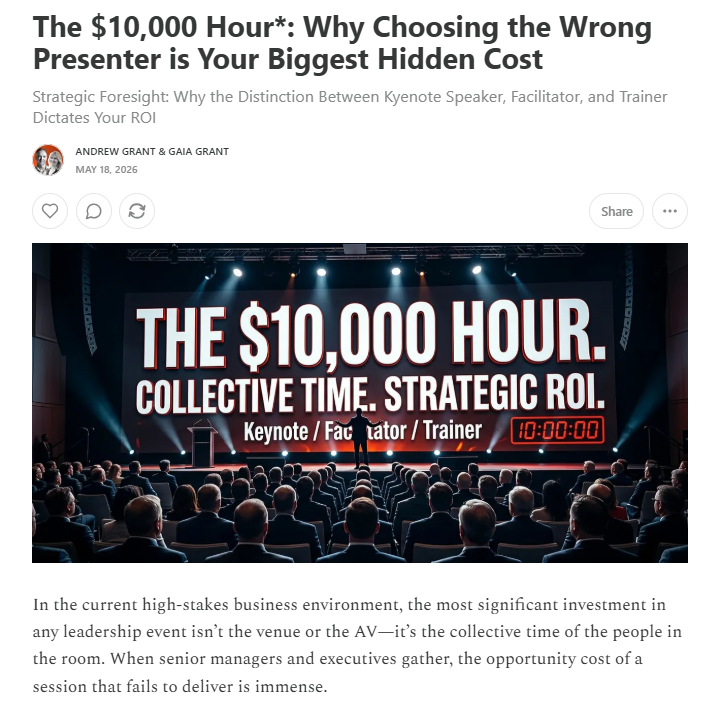
Why Multi-Perspective Delivery is the New Benchmark for High-Impact Corporate Keynote Events
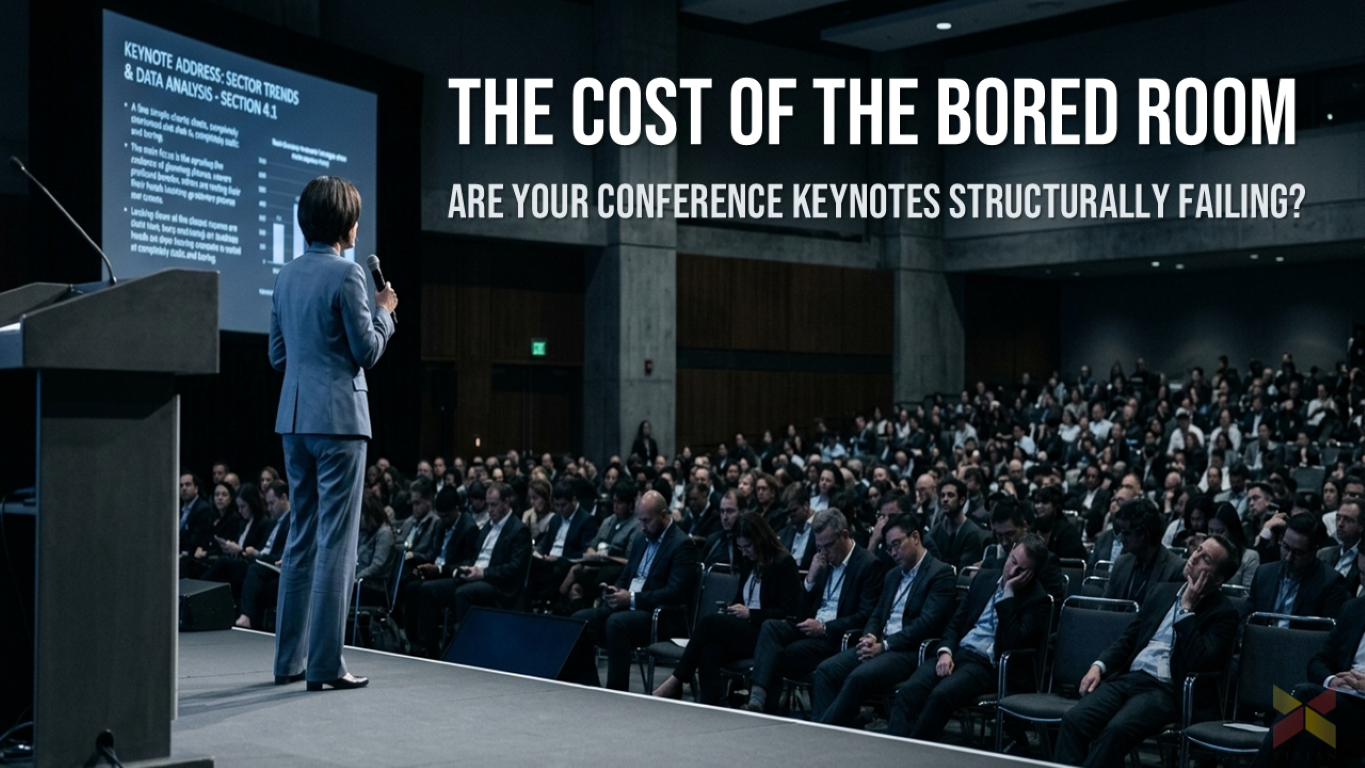
Are traditional corporate keynotes actually delivering value to modern leadership teams, or have they simply become an expensive exercise in passive listening?
I was sitting at a major conference in South Africa when the headline speaker missed his flight from the USA. After an initial wave of panic, the organizers streamed him and his most recent YouTube video onto the massive stage screens. Watching from the back, I realized that even if he had been there, he would have been a tiny, distant figure behind a lectern, delivering a one-way monologue—his facial expressions invisible to 90% of the audience, who were already looking at the screens anyway. It prompted a hard question: aside from the premium fee and the superficial prestige of a “live” “famous” appearance, what actual value was delivered by flying him halfway across the world to stand onstage compared to streamed in? As we prepared to present later that day, that question continued to niggle us: how do we ensure it is actually worth the investment to have us physically in the room, rather than just another face on a screen?
In a business landscape defined by volatility and strategic complexity, a standard 60-minute data dump struggles to hold a room—whether it is delivered by a live body or a screen. When an audience of senior executives deals daily with fast-moving, systemic challenges, the format of an event needs to be updated to match the sophistication of the room.
Moving past a monolithic speech to embrace a dynamic, custom-designed model changes the entire equation, turning a static session into a collaborative, high-value strategic forum.
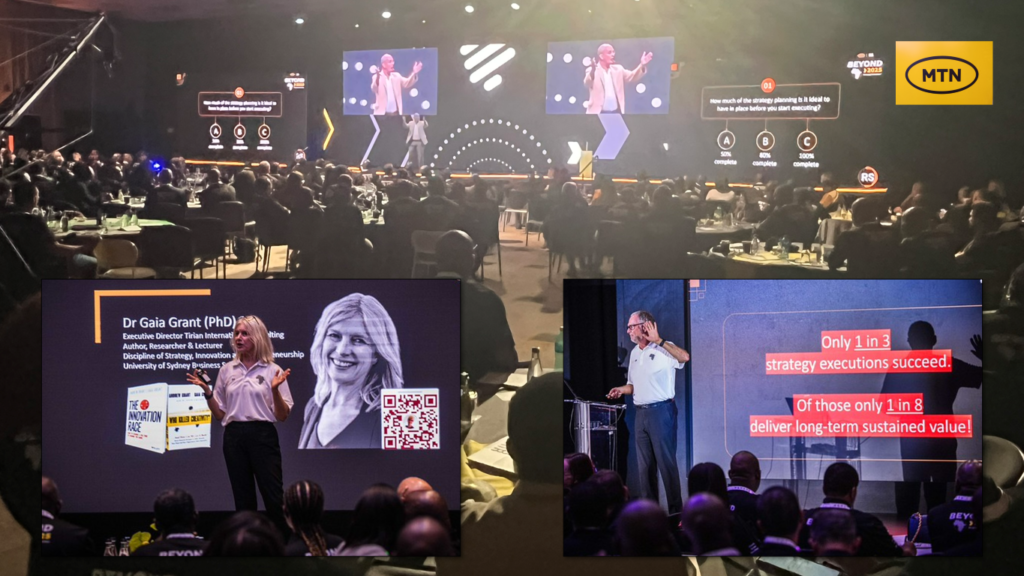
For our team in SA at this event, we had to ask ourselves, what value did we bring being live? (see our answer at the end of this article)
The Real Cost of a Failed Keynote Session
When evaluating high-level corporate events, organizations frequently focus on line-item logistics and speaker fees & expenses. This is a critical miscalculation.
The most significant cost of a failing corporate keynote is never the financial investment—it is the squandering of collective executive time.
Bringing hundreds of senior decision-makers into a single room represents an immense concentration of corporate talent and overhead. If a session consists merely of one-way information delivery, it introduces massive operational inefficiency. If the content could have been easily digested via a brief shared document or a pre-recorded video link, then gathering an executive team to sit through it live is a failure of modality.
For an organization to maximize its return on a live gathering, leadership must intentionally select a presentation method explicitly designed to achieve an interactive, strategic outcome rather than a passive broadcast.
The Pre-Event Blueprint: Defining Success Before the Stage
Achieving this level of impact is impossible with an off-the-shelf presentation. High-value delivery requires a deliberate, custom-designed approach that begins long before the lights go up. It demands deep alignment with key stakeholders to thoroughly diagnose the audience profile, unpack the cultural nuances of the room, and clearly define what a successful intervention looks like.
Crucially, this pre-event consultation serves to manage expectations regarding what a keynote is structurally designed to achieve. Rather than attempting to force a comprehensive training curriculum into a short format, a strategic keynote is designed to shift mindsets, ignite critical debate, and align a leadership team around a central vision—leaving tactical execution to follow-on frameworks.
The Single Point of Failure in Corporate Keynotes
Traditional keynotes inherently suffer from a single point of failure: one voice, one pace, one-way and one perspective.
When an event relies on a single speaker, the entire session is hostage to that individual’s specific energy level, delivery style, and cognitive bias. If the speaker’s pace doesn’t resonate with the room, or if their singular viewpoint misses the nuanced reality of the audience, engagement plummets.
Furthermore, a lone speaker is forced to manage a difficult operational paradox: they must simultaneously broadcast high-level strategic data while trying to read the subtle behavioral cues of a dark room. It is a structural limitation that caps the maximum value an audience can extract from a session.
The Strategic Value of Dual-Perspective Keynote Delivery
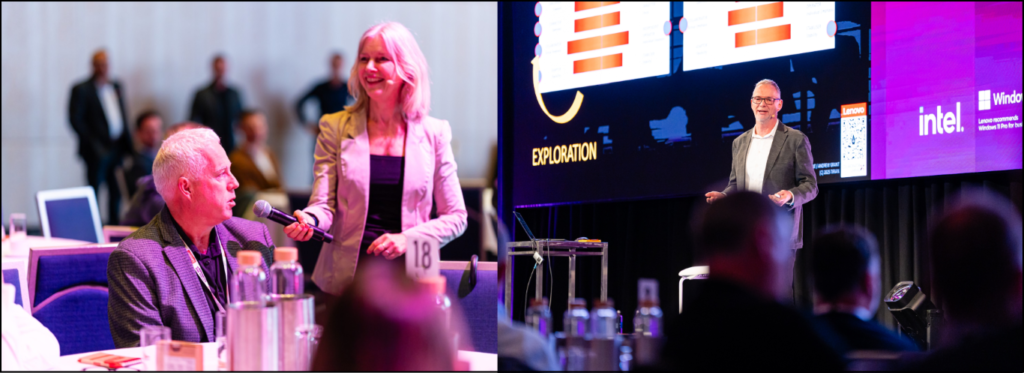
Moving beyond the monologue to a dual-presentation model shifts a keynote from a passive lecture into a high-value, strategic experience. This format offers two distinct advantages for modern corporate conferences:
1. Zero-Latency Engagement
In a standard presentation, audience interaction is an afterthought, usually relegated to a rushed five-minute Q&A at the end. A dual-delivery format eliminates this lag entirely through parallel processing.
While one presenter delivers a core strategic insight from the stage, the other remains actively engaged with the room. They are monitoring live digital polls, facilitating structural simulations, and tracking real-time participant inputs. This real-time active management ensures the audience is a core part of the session’s engine, rather than just spectators.
2. Dynamic Responsiveness
A dual team possesses the structural flexibility to pivot. Instead of executing a rigid, pre-recorded script, two presenters working in tandem can actively adjust the session’s trajectory based on the room’s energy and immediate, emergent questions.
If a specific sub-topic sparks intense interest or uncovers a critical organizational bottleneck, the team can divide responsibilities on the fly—one guiding the strategic narrative while the other contextualizes the immediate operational challenge. The content remains sharply relevant to the team’s live issues while firmly anchoring the overarching strategic goals.
Elevating Conference Keynotes to a New Standard
Relying on a single narrative voice to solve complex corporate challenges is a legacy approach. By introducing dual perspectives and active, real-time facilitation into the keynote slot, organizations can transform standard event agendas into collaborative, high-impact strategic forums.
The future of executive learning is not about listening to a single person talk; it is about experiencing how diverse perspectives collide, collaborate, and synthesize solutions in real time.
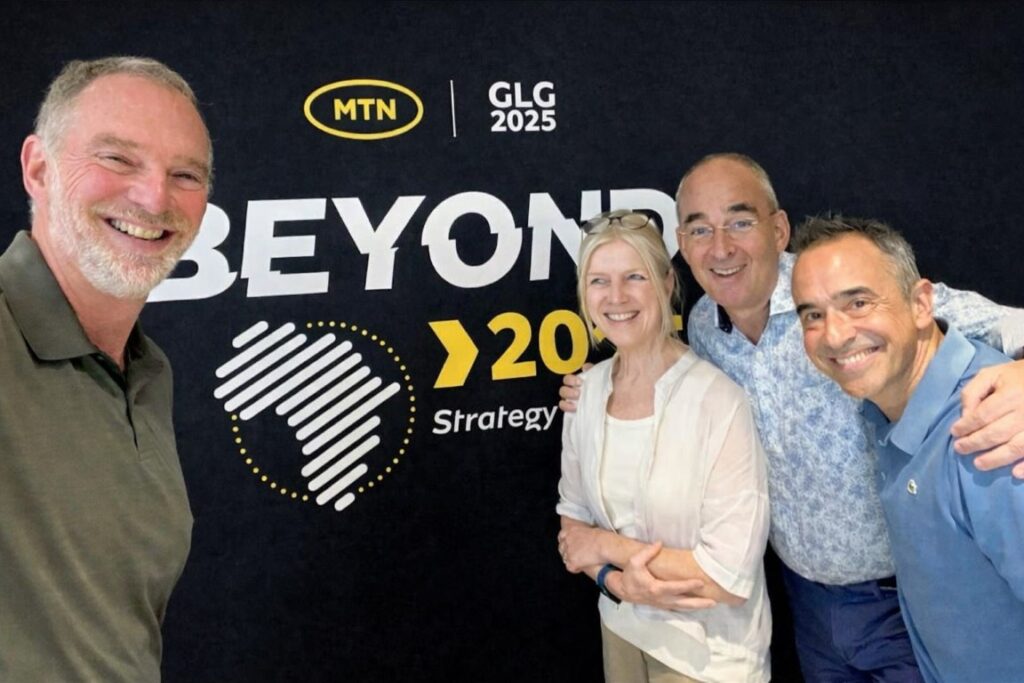
ANSWER: What value did we bring being live, with our keynotes?
With more than 400 participants flying in from across Africa—and our team traveling from Australia, UK, & Singapore—our impact didn’t begin on stage. It began months earlier, with briefings, data analysis, and surveys, then preparing keynotes, workshops, and action plans, all integrated. Delivering live allowed us to connect these elements into an integrated experience: large-stage presentations, smaller‑group workshops, table discussions, and practical planning that simply can’t happen through slides alone. Being in the room meant we could read the energy, respond in real time, and help teams turn insights into action.
Beyond the Monologue: The Strategic Advantage of Co-Delivery Keynote talk
To see this dynamic format in action, view the co-delivery showreel below (featuring Andrew Grant and Dr Gaia Grant) to observe how dual-perspective choreography operates live on stage: and visit this page.
See this article on Substack
Also see: How to choose the best keynote speaker…