

When organizations request strategic learning proposals in a vacuum, it forces guesswork. True precision happens when you define your non-negotiable business outcomes first, allowing a budget to serve as the blueprint that structurally maps the highest-value solution.
The best organizational outcomes start with shared clarity. In corporate learning and strategic interventions, a budget is not an operational constraint—it is a strategic blueprint that defines trade-offs, prioritizes outcomes, and serves as a fiscal anchor to maximize return on investment.
When a proposal is requested in a vacuum without establishing an investment range, it forces guesswork. Because fees vary drastically based on commercial outcomes, delivery methods, and customization, proposals built without these parameters risk being misaligned or prohibitively expensive—frequently wasting senior leadership’s time and stalling organizational traction.
To design a high-value, research-anchored, and strategically precise solution, professional partners require a comprehensive brief and a budget guideline prior to generating a formal proposal or pricing structure. The single largest cost of any strategic intervention is not the external fee; it is the immense high-stakes investment required to pull senior leaders and teams away from core operations. Partnering with a seasoned professional guarantees the strategic precision and research-backed depth required to protect and maximize that time investment.
The Executive Briefing Checklist
To help us eliminate the guesswork and ensure we tailor a program that delivers maximum strategic impact and alignment with your specific business goals, please provide the following details required to finalise the proposal and budget.
Strategic Objectives & Business Context:
- Background Information: Overview of the business, business unit, and current challenges (e.g., team integration, growth, structural adjustments).
- Core Objectives: Clear definition of desired outcomes and what success looks like.
- Key Mindset: Profile of the audience (professional background, cultural/geographic mix, language requirements). Is this a specific unit or a random mix, and is attendance voluntary or mandatory?
- Strategic Intent: Is this a proactive investment to build future-ready capabilities, or a reactive intervention to address specific current challenges / friction points?
- Facilitator / Presenter: Do you need a specific level of facilitation expertise or experience needed to drive your desired outcomes? (Clarify if your priority is weighted toward program content, OR a specific presenter, OR a strategic blend of both?)
Logistics & Scope:
- Customization: The amount adaption (Pre and Post) design needed / expected & add-ons.
- Event Details: Number of participants, confirmed dates, location, and total duration.
- Format: Preferred engagement type e.g., single once-off delivery vs. long-term intervention(s)*. *Same group several sessions OR same session for multiple groups. Preferred program elements (e.g., workshops, keynotes, simulations, hybrid). Face-to-face, digital, or blended/hybrid.
- Program Focus: Specific areas of interest (e.g., Leadership, Innovation, Creativity, Culture, Teams, AI)
Budget & Administrative Requirements:
- Budget Range: Providing a budget range allows Tirian to accurately calibrate the project scope, resources, and facilitator expertise to deliver the highest ROI without guesswork. (Must-haves | Like-to-haves | Not-needed)
- Travel & Expenses (T&E): Clarification on whether travel expenses will be bundled into a flat packaged fee, handled separately, or provide a single buy-out budget for travel. OR you are only looking at sourcing a local team.
- T&Cs & Procurement: Any specific procurement policies, required templates, or internal Terms & Conditions that must be reviewed
- Stakeholders & Decision Makers: who are they and what do they need to know to confidently move ahead and the decision timeline key milestones (including expected confirmation date).

From Guesswork to Precision
Imagine asking a travel agent for a round-the-world itinerary without specifying destinations, dates, or a budget. The result will either be wildly expensive—or completely misaligned with your expectations, resulting in wasted time for everyone.
Yet, this is precisely what organizations often do when they request corporate learning proposals without defining the scope of investment. We would all love to stay in the penthouse suite and travel first class, but that desire must always be tempered by a realistic budget.
A budget is not a restriction; it is a strategic tool. It defines trade-offs, prioritizes outcomes, and enables strategic partners to design the most effective solution for an available set of resources. When a client asks a strategic partner to “just send over a fee structure,” it forces the partner to guess. Because fees range drastically based on specific commercial outcomes and operational variations, a proposal built in a vacuum struggles to put the most valuable offer forward.
Why Undefined Budgets Lead to Misaligned Solutions
Without a budget guideline, external partners are forced to guess—often wasting valuable time on solutions that will never be viable.
In a recent engagement, an organization spent over two hours in a deep-dive session exploring high-level strategic outcomes for a highly extravagant, multi-day executive program. At the absolute end of the session, it was revealed that their expected budget range was structurally unrealistic for the scope discussed, rendering the entire two-hour strategic conversation irrelevant. The work had to be discarded and restarted from the beginning. Because the initial expectations had been allowed to float without a fiscal anchor, the misalignment led only to disappointment. The entire engagement had to be soberly re-mapped back to what was a must-have, what was a nice-to-have, and what was at-a-stretch—all linked directly to a realistic budget range.
Anchoring Value: Why Great Programs Start with Clear Parameters
Expert partners do not want to send an off-the-shelf, commoditized rate card; they want to add as much customized value as possible. However, the first minute of any program engagement is always the most expensive because a commitment blocks the same operational time, and complex requests require deep instructional design just to formulate an accurate framework.
Once the operational basics are locked down, an experienced partner can identify creative ways to inject extra value, leverage existing frameworks, and ensure a seamless cultural fit.
Without basic parameters and an expected fee range, a proposal floats unanchored. It risks being prohibitively expensive, which frequently results in losing the engagement before it is even properly considered by senior leadership.
Defining the Delivery Method
Misalignment between requested delivery formats and audience sizes is a common scoping risk. Requesting a full-day, intimate, interactive workshop for 500 people is logistically impossible, while requesting a 20-minute keynote for a small group of 20 results in low strategic ROI.
To maximize engagement and cost-efficiency, the delivery method must match the scale of the group. Building an accurate brief requires aligning the expected content with the correct methodology:
Keynote Talk: Designed to inspire, engage, and motivate large audiences. It delivers original, research-backed intellectual property from a recognized field expert in a highly stimulating, high-impact format. (Best at the beginning of a conference)
Workshop: Functions as a mechanism to look outward, discover new ideas, and build practical corporate skills. Typically delivered to smaller groups over longer timeframes, prioritizing deeper conceptual dives, interaction and action planning.
Business Facilitator: Acts as a structured process mirror, helping teams navigate internal tensions, build ownership, and develop actionable plans. This is achieved through two distinct roles: a Content Expert who provides intellectual property to shape strategic direction, or a Process Guide who focuses purely on guiding the client’s agenda to a clear outcome without introducing external frameworks.
Gamified Simulation / Experiential Learning: Creates a safe “virtual practice field” where teams test behavioral assumptions, unpack workplace complexities, and discover critical alignment through hands-on, immersive experiences.
Hybrid Delivery: A deliberately engineered blend of the methods above—such as an opening strategic keynote seamlessly flowing into a workshop or gamified simulation, followed by a facilitated practical debrief.
Each method carries distinct operational pros, cons, and limitations. The more complex the requested engagement, the more detailed the initial brief must be.

The Risk of Third-Party Intermediaries
The risk of project failure multiplies when an organization delegates this scoping process to an intermediary or junior representative who may lack a deep understanding of the required strategic business outcomes. When a party is unable to establish accurate fee ranges and attempts to negotiate rates entirely out of context, the probability of a delivery mismatch increases significantly.
Strategic price and outcome negotiation is not about driving the cost down to the lowest number, but rather about maximizing value and securing the highest quality outcomes within restricted budget parameters. This process is handled best when addressed directly by the ultimate decision-maker. Attempting to negotiate through isolated intermediaries risks presenting a compromised, low-ball price to leadership, only to discover later that critical strategic outcomes have been severely degraded.
The Real Hidden Cost: Protecting Your High-Stakes Time Investment
In corporate events and strategic interventions, the single largest cost is rarely the external fee—it is the immense investment required to pull senior leaders and teams away from core operations to assemble them in one room. If that high-stakes time is squandered on surface-level concepts delivered by an inexperienced presenter/facilitator, the true strategic and financial loss to the organization is substantial.
Investing in a seasoned professional reflects a higher initial fee, but it guarantees the strategic precision, research-backed depth, and execution capability required to maximize the return on your collective time and ensure the intervention successfully transfers back to the business.
Grounding the Proposal Fit
If your organization does not yet have a defined budget range for an upcoming event, look closely at past arrangements. Assess what was paid previously and critically evaluate the value received. Do you expect the exact same standard, or are you looking for a superior, deeply customized leadership differentiator this time around? It is worth asking how you will measure success, estimate risk, and what you are prepared to invest to achieve those targets.
Sharing a budget guideline allows an external partner to streamline viable options, unlock flexible rate tiers (such as executive-level allocation versus streamlined frameworks), and maximize the return on your investment. The most successful deliveries are won long before the actual presentation day, achieved through deep strategic alignment, meticulous framework integration, and rigorous preparation with stakeholders.
As budget parameters and strategic outcomes are intrinsically linked, the most efficient path forward is always to establish a direct discovery call between the key decision-makers and the strategic partner. This clarifies the real drivers behind the event and ensures the absolute best use of organizational resources.
Next Strategic Step: Because budget parameters and strategic outcomes are intrinsically linked, the most efficient path forward is to establish a direct discovery call with the key decision-makers to clarify the core drivers behind the event.
Fee Range Expectations:
A range exists because keynote speaking is not a commodity. Fees reflect the speaker’s reputation, demand, risk, preparation & willingness for customization and the stakes of the event – not just how long they spend on stage.
- USD$5,000 to $10,000: Emerging voices, regional specialists, strong signature talks on a defined niche, often with growing media profiles.
- $10,000 to $25,000: Established speakers with a published book or specific operating credential (e.g., ex–Big Tech, former public office, recognized academic position). This is where most corporate keynote work happens.
- $25,000 to $50,000: Recognized names with a research base, a global track record, published books, and audience demand that allows them to be selective. Innovative, unique & new content and methods, (beyond a traditional delivery). Usually booked for flagship events where the speaker is the headline.
- $50,000+: The “headline” tier, including former Google/OpenAI executives, government leaders, and bestselling authors with mass‑market recognition; usually booked for flagship events where the speaker is the headline to draw a crowd.
NOTE: Fee flexibility may be considered based on specific event variables, including lead time, group size / timing / where, sector-specific status (e.g., non-profit, education, or association), strategic alignment, and administrative requirements. Dialogue regarding budget and desired outcomes is encouraged to explore potential alignment and, where appropriate, to identify opportunities for additional value-added deliverables.
– Reference: How Much Does a Keynote Speaker Cost?
Article by Andrew Grant / Dr Gaia Grant (C) tirian.com
SEE MORE:
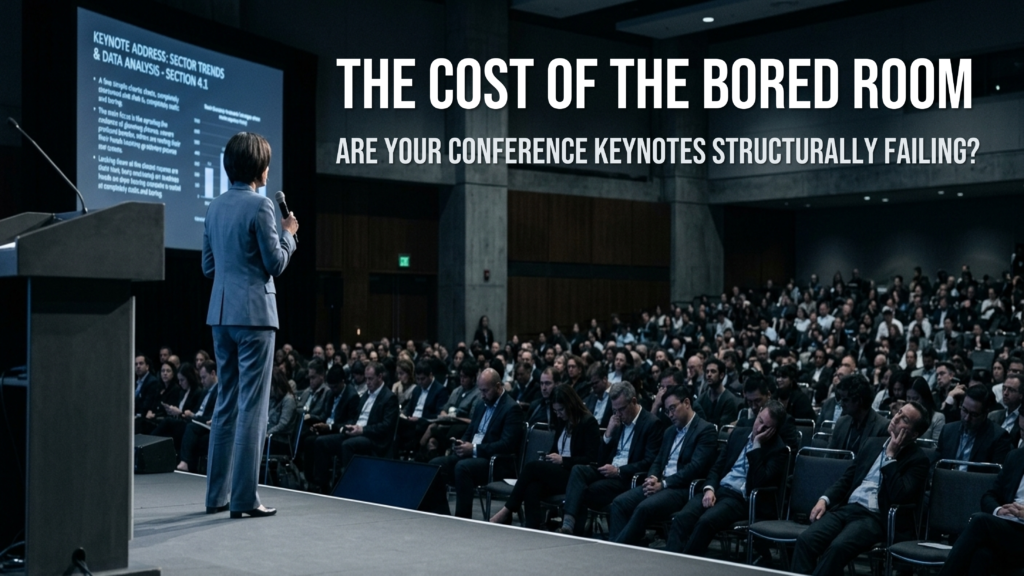
Beyond the Monologue: Is the Single-Presenter Keynote Failing Modern Audiences?
Exploring Why Multi-Perspective Delivery is the New Benchmark for High-Impact Corporate Events
https://andrewgaiagrant.substack.com/p/beyond-the-monologue-why-the-single
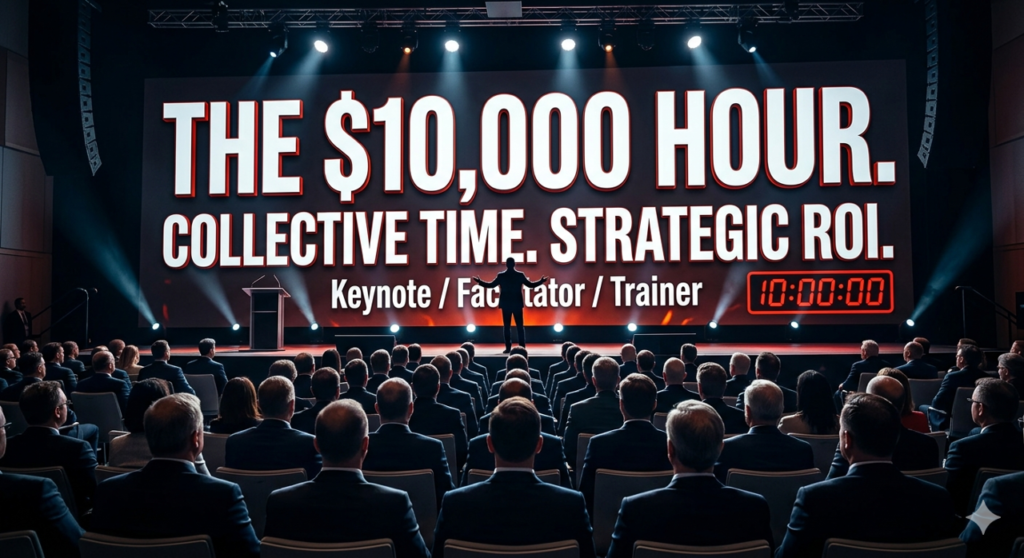
The $10,000 Hour*: Why Choosing the Wrong Presenter is Your Biggest Hidden Cost
Strategic Foresight: Why the Distinction Between Kyenote Speaker, Facilitator, and Trainer Dictates Your ROI
https://andrewgaiagrant.substack.com/p/the-10000-hour-why-choosing-the-wrong